

Ever felt like you’re wrestling with veggies instead of cooking? I get it. Slow, uneven chopping can make any meal prep feel like a never-ending chore.
But it doesn’t have to be that way. I’ve spent years honing my skills in the kitchen, and let me tell you, mastering a few important knife skills can completely transform your cooking game. Forget the fancy terms you don’t need.
This guide is all about giving you the foundation that matters. You’ll be faster, safer, and way more confident. Ready to slice through your kitchen frustrations?
Let’s get started.
Before You Cut: Get These Two Right
Let’s get straight to it. Great technique? It starts before you even touch the board.
You hear people rave about the important knife skills you need. But without the right knife and grip, it’s just talk.
First up, the Chef’s Knife. Forget whole blocks of knives collecting dust. The Chef’s Knife is the MVP of your kitchen lineup.
Its curved blade lets you rock back and forth for smooth slicing, and the sturdy build handles chops like a pro wrestler. It’s your go-to for almost every task. Why clutter your counter?
Now, holding the knife. If you’ve been using the handle grip, stop. It’s less stable and more like driving with one hand on a rollercoaster (not fun).
The pinch grip is what you need: thumb and index finger on the blade, the rest on the handle. This gives you control, safety, and confidence. And let’s be honest, we could all use a little more of those in the kitchen.
Wondering how this connects to smarter cooking? Think about art of meal prepping busy lives. If you’re slicing veggies or dicing onions, you want every cut to count (that efficiency matters).
So, why settle for less? Choose the knife you’ll actually use and grip it right. Mastering these basics can transform your cooking game.
You’ll thank me when your fingers stay intact, and your dishes come out just right. Ready to slice like a pro?
The Core Four: Slice, Dice, Mince, and Julienne
What’s the secret behind mastering almost any dish? It’s knowing just four basic cuts. These are not just important knife skills but the foundation for about 90% of recipes you’ll encounter.
Think about it, how many times have you fumbled around with a knife, unsure of the right cut? Let’s change that.
First, the Slice. This one’s straightforward (and) shockingly overlooked. It’s all about a smooth forward-and-down or a rocking motion.
Picture yourself slicing through mushrooms or zucchini, creating uniform pieces. Why does this matter? Even cooking.
You want those veggies to cook at the same rate, especially in sautés or on the grill. Nobody wants half-burnt, half-raw chunks.
Next up is the Dice. Take your slices and turn them into cubes. Simple, right?
Yet, the difference between a rough chop and a uniform dice is like night and day. In soups, stews, or even in a mirepoix (fancy word for chopped celery, onions, and carrots), every spoonful should have a consistent texture. Otherwise, it’s just a mess.
Now, let’s mince words (or) rather garlic and ginger. The Mince is key. It’s about getting those ingredients as small as possible.
You achieve this by rocking your knife over a pile of chopped ingredients. The smaller the pieces, the more flavor they release without overpowering. Ever bitten into a giant chunk of ginger?
It’s not pleasant.
Finally, the Julienne or Matchstick. This one’s slightly more advanced but key for certain dishes. You’re creating thin, uniform sticks from vegetables like carrots or bell peppers.
Why bother? Because in salads, slaws, and stir-fries, you want quick cooking and delicate textures. It’s about finesse, not haphazard chopping.
Still curious about the nitty-gritty of these cuts? Check out this resource. It dives deeper into the techniques, if you need a visual guide (sometimes words aren’t enough).
Here’s a pro tip: invest in a good knife. It’s like upgrading from dial-up to high-speed internet. Sure, you can slice with a blunt blade, but why make life harder?
Remember, these cuts aren’t just about making food look pretty. They’re about cooking better, faster, and with more precision. So, pick up that knife and practice.
Start with slicing your veggies tonight. You might be surprised by how much more enjoyable (and less frustrating) cooking becomes when you master these important knife skills.
Mastering the Onion Dice: Cut Without Tears
Ever tried to dice an onion and ended up sobbing like you’re in a soap opera? Let’s stop that nonsense. Here’s how to dice an onion without turning on the waterworks (plus, you’ll master some important knife skills).
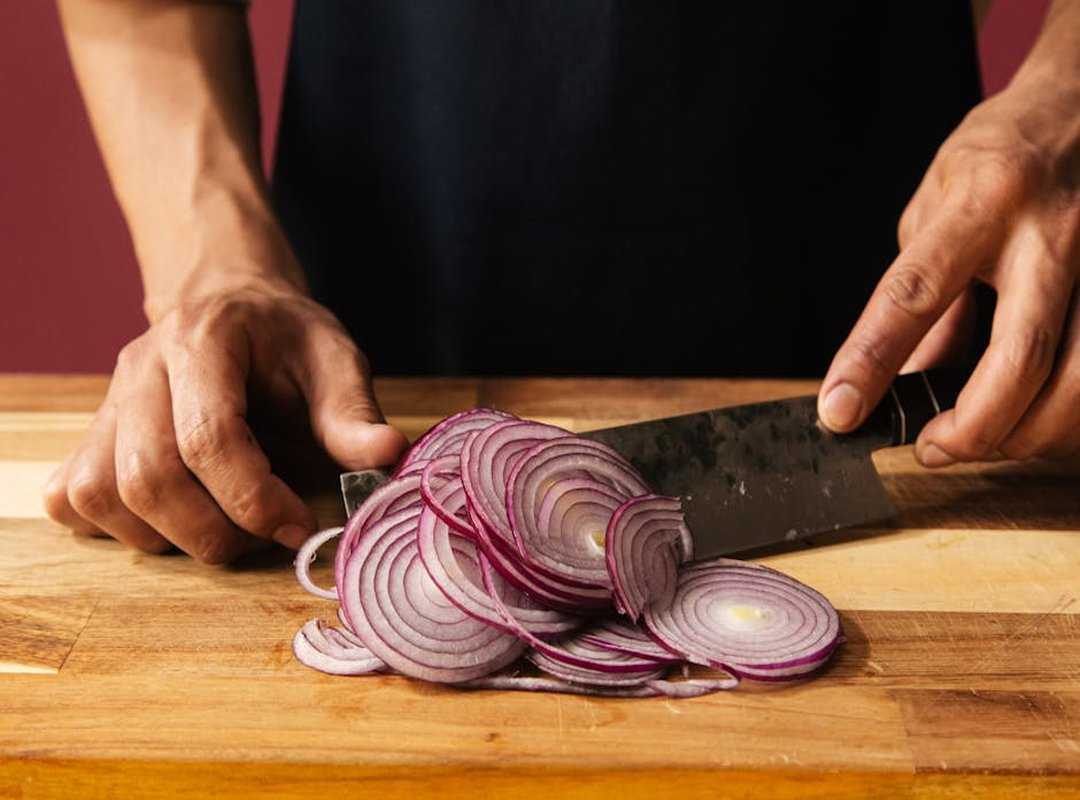
First, the setup. Cut the onion in half right through the root, then peel off that stubborn skin. Lay it flat on your cutting board for stability (no runaway onions here).
Stability is key for safety and precision.
Now, for the vertical cuts. Hold the onion firmly and make parallel vertical slices, but don’t cut through the root. The root is like the onion’s seatbelt; it holds everything together while you work your magic.
Next, let’s slice horizontally. Make one or two horizontal cuts parallel to the board. Don’t overthink it.
The fewer, the better since it keeps the onion intact.
Finally, the moment of truth: the dice. Slice down across the previous cuts, and voilà, you’ve got uniform pieces. The secret to reducing tears?
A sharp knife. It slices cleanly, releasing fewer tear-inducing chemicals. Pro tip: Work near a vent to disperse those pesky vapors.
Dicing onions can be a hassle, but with these steps, you’re slicing through like a pro. Need more cooking tricks? Check out time saving hacks home cook and make your kitchen time more fast.
Remember, practice makes perfect. Keep at it, and soon you’ll be chopping like a chef. So go on, grab an onion, and show it who’s boss.
Stay Safe: The ‘Claw Grip’ and Kitchen Habits
I’ve learned the hard way that speed in the kitchen doesn’t mean rushing. It’s all about good technique. You don’t need to rush to be fast.
Ever tried the ‘Claw Grip’? You hold the food with your non-knife hand, curl your fingertips under, and let your knuckles guide the blade. It feels awkward at first, but trust me, it’s one of those important knife skills that saves your fingers from nasty cuts.
Safety isn’t just about how you hold the knife. Your cutting board should be stable (sliding boards are a nightmare). A damp paper towel underneath can keep it in place.
And, oh, never drop a knife into a sink full of soapy water. You might as well be fishing for danger without looking.
These habits might seem basic, but they’re lifesavers. Why risk injury when a little technique can make cooking both safer and more enjoyable?
Chop Like a Pro
You started clumsy, but now you’ve got the know-how. With practice, those important knife skills transform cooking from a chore into a joy. Remember how slow prep frustrated you?
Well, mastering a few core techniques, not endless cuts, is your key to efficiency.
So here’s the challenge: pick one vegetable, one technique from this guide, and practice it this week. Trust me, you’ll improve fast. Cooking will feel less like a job and more like an art.
Why wait? Start chopping now. You’ll find yourself slicing with confidence before you know it.
Ready to make the kitchen yours?
 Xolren Xelvaris is the kind of writer who genuinely cannot publish something without checking it twice. Maybe three times. They came to ingredient spotlights and recipes through years of hands-on work rather than theory, which means the things they writes about — Ingredient Spotlights and Recipes, Global Flavors and Fusions, Kitchen Prep Hacks, among other areas — are things they has actually tested, questioned, and revised opinions on more than once.
That shows in the work. Xolren's pieces tend to go a level deeper than most. Not in a way that becomes unreadable, but in a way that makes you realize you'd been missing something important. They has a habit of finding the detail that everybody else glosses over and making it the center of the story — which sounds simple, but takes a rare combination of curiosity and patience to pull off consistently. The writing never feels rushed. It feels like someone who sat with the subject long enough to actually understand it.
Outside of specific topics, what Xolren cares about most is whether the reader walks away with something useful. Not impressed. Not entertained. Useful. That's a harder bar to clear than it sounds, and they clears it more often than not — which is why readers tend to remember Xolren's articles long after they've forgotten the headline.
Xolren Xelvaris is the kind of writer who genuinely cannot publish something without checking it twice. Maybe three times. They came to ingredient spotlights and recipes through years of hands-on work rather than theory, which means the things they writes about — Ingredient Spotlights and Recipes, Global Flavors and Fusions, Kitchen Prep Hacks, among other areas — are things they has actually tested, questioned, and revised opinions on more than once.
That shows in the work. Xolren's pieces tend to go a level deeper than most. Not in a way that becomes unreadable, but in a way that makes you realize you'd been missing something important. They has a habit of finding the detail that everybody else glosses over and making it the center of the story — which sounds simple, but takes a rare combination of curiosity and patience to pull off consistently. The writing never feels rushed. It feels like someone who sat with the subject long enough to actually understand it.
Outside of specific topics, what Xolren cares about most is whether the reader walks away with something useful. Not impressed. Not entertained. Useful. That's a harder bar to clear than it sounds, and they clears it more often than not — which is why readers tend to remember Xolren's articles long after they've forgotten the headline.