
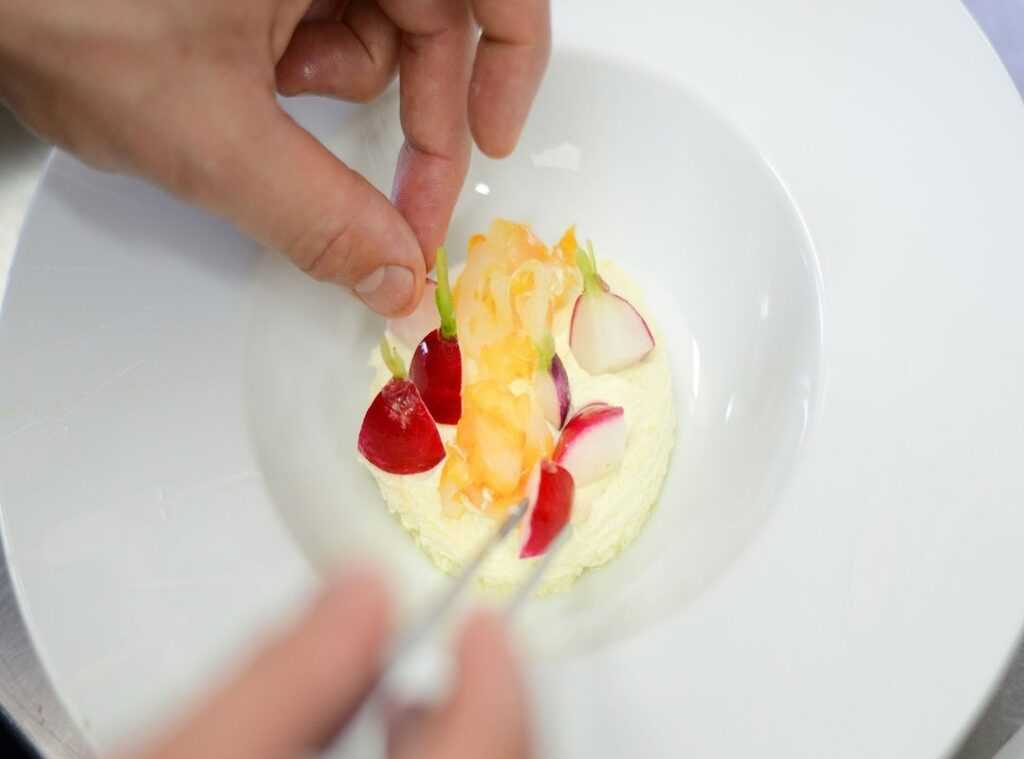
Ever tasted a liquid sphere bursting with flavor? Or a foam that melts in your mouth? It’s like magic, right?
Many home cooks, maybe even you, think molecular gastronomy at home is out of reach. Too complex, too expensive, needs a lab. But that’s all wrong.
We love culinary experimentation and have broken down advanced techniques for curious home cooks. Do you want to know how molecular cooking actually works? This guide will demystify this art.
You’ll get a clear, simple roadmap to start at home. Learn what molecular cooking is, the important starter kit, and three beginner-friendly techniques you can try right away. Ready to transform your kitchen into a playground?
Dive in, and let’s open up those secrets together.
Molecular Cooking: Science Meets Flavor at Home
Molecular gastronomy at home? Sounds fancy, right? It’s not.
Think baking is chemistry? This is that, but ramped up. You’re not tossing out nature either.
It’s about understanding how food changes physically and chemically. Picture yourself as a scientist in a flavor lab (not) just a cook following a recipe.
You’re using natural ingredients. Seaweed extracts, for instance, to tweak textures. It’s not some unnatural science experiment.
It’s about cooking with a purpose: intensifying flavors and crafting new textures that surprise your palate.
So, why try molecular gastronomy? It’s not about showing off with flashy dishes. It’s about elevating taste, creating unexpected sensations, and transforming your meals into art.
Imagine serving a tomato that tastes more like a tomato than you ever thought possible. That’s the magic here.
I know you might be skeptical. I was too. But once you see how it opens up a playground of flavors, you’d wonder why you didn’t try it sooner.
Oh, and if you’re curious about culinary experimentation, check out the edible insects new flavors frontier. Talk about pushing boundaries, right?
Your Important Starter Kit: Tools and ‘Magic’ Ingredients
Important Gear You Might Already Own
Let’s face it, diving into molecular gastronomy at home sounds daunting. But you probably have some of the tools already. First up, a precise digital scale.
It measures to 0.1g, and trust me, accuracy is non-negotiable. You wouldn’t eyeball rocket fuel, right? Same principle here.
Next, the immersion blender. It’s a game changer for creating smooth emulsions and foams. When I first tried it, I was amazed at how it transformed liquids into airy wonders.
A fine-mesh sieve is also important. It’s not just for dusting powdered sugar. In molecular cooking, it perfects purées and strains spherification baths.
No clumps allowed!
The Beginner’s Pantry of ‘Magic’ Powders
Now, let’s talk powders. Sodium Alginate and Calcium Chloride are your go-to for spherification. This duo makes liquid spheres.
Think caviar but more fun. Ever tried popping a flavored bubble in your mouth? That’s the magic.
Then there’s Soy Lecithin. This little gem helps create stable, light foams and ‘airs’. Imagine a delicate cloud of flavor on your dish.
It’s the type of thing you’d see at high-end restaurants and think, “I could never do that.” But you can.
Agar-Agar is another must-have. Sourced from seaweed, it’s a solid gelling agent. Unlike gelatin, it holds up under heat.
So, if you want firm, heat-resistant gels, Agar-Agar is your friend. It’s like the secret weapon for people who love to experiment.
For those who want to dive deeper, check out molecular gastronomy recipes 11913956. You’ll find plenty of inspiration there. Once you start experimenting, you’ll see why so many chefs are obsessed with these techniques.
Who knew science could taste so good?
Wow Your Guests with Molecular Magic
Ready to leap into the world of molecular gastronomy at home? It’s time to dazzle not just your guests but yourself too. First up, let’s talk about basic spherification.
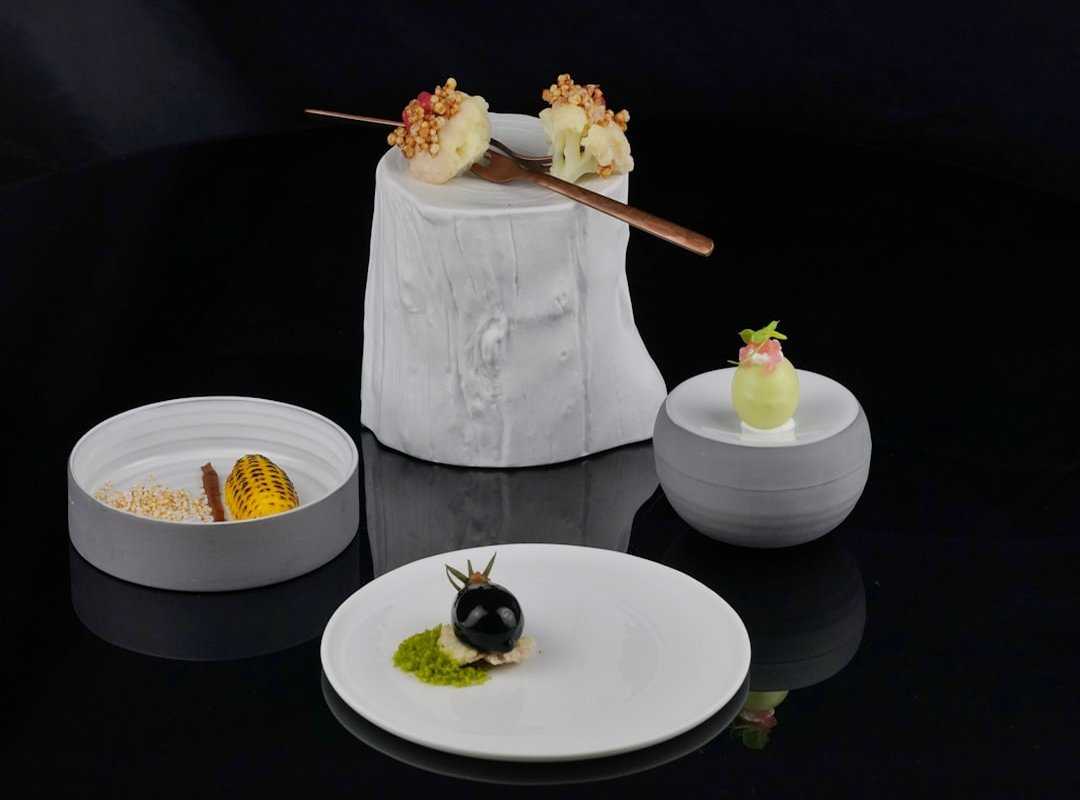
Ever hear of fruit “caviar”? It sounds fancy, but it’s not as tricky as it seems. Here’s the deal: you take a flavorful liquid, say raspberry juice, mix it with sodium alginate, and drop it into a calcium chloride bath.
What happens? Tiny spheres form, bursting with flavor. Imagine these on desserts, cocktails, or salads.
Your taste buds will thank you.
Next, let’s make some culinary foams. You know, those light airy toppings that make dishes pop? It’s all about soy lecithin stabilizing air bubbles.
Start with lemon juice and water, blend it well with an immersion blender until airy. You’ve got yourself a lemon air, perfect for topping grilled fish, scallops, or even a gin and tonic. Trust me, your guests will be impressed when they hear it’s homemade.
Now, for the adventurous among you, there’s something really cool: heat-resistant gels. Agar-Agar is the star here, unlike gelatin, it won’t melt when things heat up. Puree some herbs or fruits, mix with agar-agar, and then push it through a syringe into cold water.
Voilà, noodle-like strands that add flair to any dish. Picture these as unique garnishes for soups or savory plates. Not your typical noodle, right?
If all this tickles your culinary curiosity, you’re not alone. The future of cooking is unfolding right before us. Speaking of the future, have you ever wondered about the artificial intelligence future of cooking?
It’s fascinating how tech is reshaping kitchens, just as these techniques transform your dining table.
So, there you have it. Three techniques to make dining more than just eating. It’s an experience.
And isn’t that the ultimate goal here? To fill stomachs but to spark conversations, create memories, and maybe even inspire future chefs. Go ahead, try these out, let the magic begin.
Safe and Delicious: Navigating Molecular Gastronomy at Home
Thinking about trying molecular gastronomy at home? Let’s talk safety first. It’s not a game of “a pinch of this” in your kitchen.
Precision is key. Follow the recipes exactly until you get the hang of it. Trust me, once you understand the principles, you’ll appreciate the difference.
Now, where to get those exotic ingredients? Stick to food-grade options from reputable culinary suppliers online. They won’t let you down.
Plus, these ingredients are commonly used in the food industry and are safe when used correctly. No need to worry there.
Start with baby steps. Master one technique before diving into a whole molecular meal. It’s like learning to walk before you run.
You’ll build confidence and avoid unnecessary frustration. And believe me, your taste buds will thank you for taking it slow. Ready to dive in?
It’s a fascinating world when approached with care and curiosity.
Dive Into Home Cooking Magic
You’ve discovered that molecular gastronomy at home isn’t just a distant chef’s fantasy. It’s right at your fingertips, ready to transform your kitchen. Wasn’t the intimidation factor the real barrier?
Now, with the right tools and techniques, you’re clear to explore. A few simple science tricks and suddenly, you’re not just cooking. You’re creating.
Why stick to the ordinary? Choose a technique like fruit caviar or lemon air, and dive in this week. The first step is always the most thrilling.
Don’t you want to taste that thrill?
For those hungry for more, our library of culinary experiments awaits. Unleash the full potential of your kitchen. Ready to embrace this adventure?
Start today and make your meals extraordinary.
 Regina Hoodecons has opinions about global flavors and fusions. Informed ones, backed by real experience — but opinions nonetheless, and they doesn't try to disguise them as neutral observation. They thinks a lot of what gets written about Global Flavors and Fusions, Culinary Buzz, Renkooki Culinary Experimentation is either too cautious to be useful or too confident to be credible, and they's work tends to sit deliberately in the space between those two failure modes.
Reading Regina's pieces, you get the sense of someone who has thought about this stuff seriously and arrived at actual conclusions — not just collected a range of perspectives and declined to pick one. That can be uncomfortable when they lands on something you disagree with. It's also why the writing is worth engaging with. Regina isn't interested in telling people what they want to hear. They is interested in telling them what they actually thinks, with enough reasoning behind it that you can push back if you want to. That kind of intellectual honesty is rarer than it should be.
What Regina is best at is the moment when a familiar topic reveals something unexpected — when the conventional wisdom turns out to be slightly off, or when a small shift in framing changes everything. They finds those moments consistently, which is why they's work tends to generate real discussion rather than just passive agreement.
Regina Hoodecons has opinions about global flavors and fusions. Informed ones, backed by real experience — but opinions nonetheless, and they doesn't try to disguise them as neutral observation. They thinks a lot of what gets written about Global Flavors and Fusions, Culinary Buzz, Renkooki Culinary Experimentation is either too cautious to be useful or too confident to be credible, and they's work tends to sit deliberately in the space between those two failure modes.
Reading Regina's pieces, you get the sense of someone who has thought about this stuff seriously and arrived at actual conclusions — not just collected a range of perspectives and declined to pick one. That can be uncomfortable when they lands on something you disagree with. It's also why the writing is worth engaging with. Regina isn't interested in telling people what they want to hear. They is interested in telling them what they actually thinks, with enough reasoning behind it that you can push back if you want to. That kind of intellectual honesty is rarer than it should be.
What Regina is best at is the moment when a familiar topic reveals something unexpected — when the conventional wisdom turns out to be slightly off, or when a small shift in framing changes everything. They finds those moments consistently, which is why they's work tends to generate real discussion rather than just passive agreement.